Digest note
China Accelerates Optoelectronic and Third-Generation Semiconductor Development for AI
DateSectionComputing and AI
In briefChina is rapidly advancing its development of next-generation optoelectronic chips and third-generation semiconductors, as research institutions and state-owned technology enterprises push to overcome the physical constraints of conventional silicon infrastructure supporting artificial intelligence computing networks.
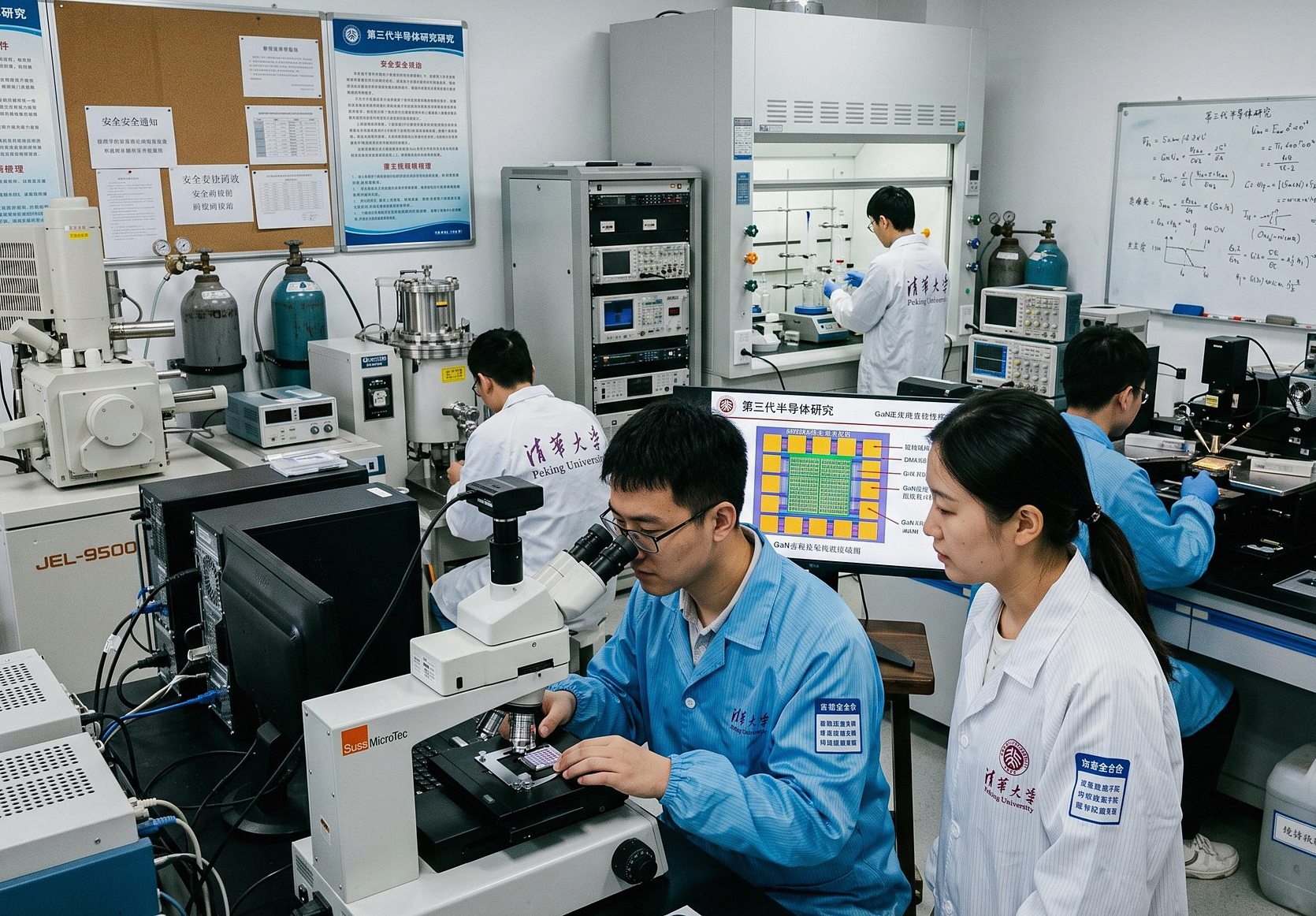
The strategic direction was laid out at the 2026 ZGC Forum Series on Compound Semiconductor Optoelectronic Devices in Beijing, where industry leaders described a fundamental shift toward optoelectronic fusion. Wu Ling, Director of the ZGC Semiconductor Lighting Joint Innovation Key Laboratory, said compound semiconductor optoelectronics are entering a pivotal growth phase, driven simultaneously by technical breakthroughs and broader commercial adoption.
Scientific speakers argued that traditional electrical interconnects can no longer keep up with the exponential growth of AI workloads. Luo Yi, a professor at Tsinghua University and an academician of the Chinese Academy of Engineering, said AI represents the largest market opportunity for optoelectronics, as conventional copper wiring is hitting hard ceilings in both bandwidth and energy consumption. Luo identified co-packaged optics, in-memory computing, and reconfigurable optical switching as critical to coordinating memory, calculation, and transmission resources across large-scale computing clusters.
Manufacturing Milestones on 12-Inch Wafers
Researchers presented significant progress toward commercial-scale manufacturing. Yu Siyuan, a professor at Sun Yat-sen University, reported that his team achieved on-chip laser emission for indium phosphide lasers on 12-inch silicon photonic wafers, with a bonding yield exceeding 90 percent. The wafers were paired with detectors operating at an 80-gigahertz bandwidth.
Wang Xingjun, a professor at Peking University, introduced an integrated optoelectronic oscillator covering a spectrum from 0.5 to 115 gigahertz. The device is described as addressing the noise accumulation that affects conventional electrical frequency multipliers.
CETC Details Silicon Carbide Supply Chain
State-owned China Electronics Technology Group Corporation laid out major industrialization milestones in third-generation silicon carbide semiconductors. Drawing on the research history of its 13th Research Institute, CETC confirmed it has established a fully domestic supply chain covering raw materials, chips, integrated micro-systems, and commercial power modules.
CETC development teams noted that the rapid expansion of AI data centers has generated urgent demand for low-loss power components, prompting custom co-development work with power and computing companies. The conglomerate stated plans to scale its silicon carbide manufacturing processes through 2030 across smart grids, electric vehicles, and AI computing hubs, with the goal of strengthening national technological self-reliance.
Connecting Optical and Power Technologies
Taken together, the developments presented in Beijing address both the communications and power requirements of advanced computing infrastructure. Optoelectronic devices are being developed to improve how information moves across computing clusters, while silicon carbide components are being industrialized for applications requiring low-loss power management. The work spans lasers, detectors, oscillators, photonic wafers, optical switching, and power semiconductors across multiple parts of the technology chain.
Based on reporting by Global Sources
Also in this issue
- QuEra Survey: 45% of Firms Now Prioritize Quantum Fault-Tolerance RoadmapsQuantum Zeitgeist
- DOE Report Sets Three-Phase Roadmap Toward Error-Corrected Quantum ComputingQuantum Zeitgeist
- AI Infrastructure Spending Forecast to Hit $769 Billion in 2026 Amid Safety WorriesET Enterprise AI
- DOE Publishes National Quantum Computing Roadmap After Broad Stakeholder ProcessFermilab (.gov)
- Inaccurate AI Summaries Found to Distort How People Remember EventsMirage News