Digest note
DOE Report Sets Three-Phase Roadmap Toward Error-Corrected Quantum Computing
DateSectionComputing and AI
In briefThe U.S. Department of Energy has released a report charting a milestone-driven path to error-corrected quantum computers by 2028, led by a subcommittee chaired by Fermilab chief technology officer Anna Grassellino and informed by hundreds of contributors from academia, industry, and federal agencies.
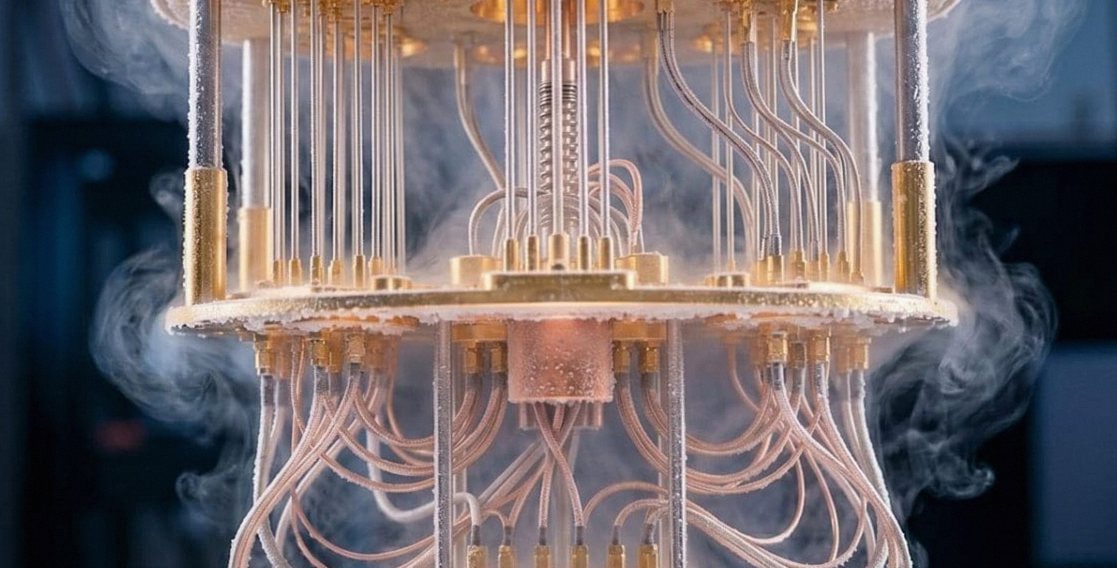
The "SCAC Quantum Committee Report: Path to an Integrated Quantum Future" proposes moving away from hardware-centric goals in favour of measuring progress by scientific utility. The report states: "Our goal is not simply to build the largest quantum computer; it is to solve problems that are otherwise completely intractable." It outlines a phased approach intended to reach that benchmark by 2028.
The recommendations draw on input from contributors spanning universities, industry, and federal agencies, reflecting a broad collaborative effort. The Department of Energy describes scientific utility as a key priority, and the roadmap is designed to integrate quantum systems with existing DOE infrastructure, including high-performance computing resources and artificial intelligence capabilities.
Three Phases Aligned With Quantum Genesis Initiative
The SCAC recommends a three-phased framework aligned with the national Quantum Genesis Initiative. Phase I, running from 2026 to 2028, calls for establishing multidisciplinary pairings of national laboratories, universities, and industry to co-design hardware, algorithms, and software, with progress measured against specific, milestone-driven scientific targets.
The second phase envisions a dedicated DOE Quantum Computing User Facility, described as distinct from commercial cloud services and intended to function as an open scientific instrument. Researchers and technology providers would collaboratively develop hardware architectures, control systems, and software stacks, with the facility drawing on lessons from the initial phase to support wider access to quantum resources.
The roadmap extends beyond 2030, anticipating a future in which quantum computing is woven into existing scientific infrastructure rather than operating in isolation. The Department of Energy characterises this moment as a historic inflection point and expects the United States to lead the next era of discovery through this approach.
Quantum Systems to Augment DOE's HPC and AI Networks
The report sets out a vision in which quantum co-processors, simulators, and sensors are integrated into the broader DOE scientific enterprise. Application areas cited include drug discovery, catalyst design, fusion materials simulation, and early universe modelling. The report states: "We are talking about predicting exact molecular properties for drug discovery, designing transformative catalysts for manufacturing, simulating fusion-relevant materials, and modeling the fundamental physics of the early universe."
To support this integration, the report calls for dismantling traditional barriers between hardware developers and domain scientists. Partnership models under active consideration include embedded co-design fellowships, joint appointments, and shared technical staff across industry and national laboratories. The report notes: "Breakthrough science occurs when hardware developers and domain scientists work side-by-side."
Fermilab expressed gratitude to the SCAC Quantum Subcommittee members and the hundreds of contributors whose expertise shaped the roadmap, and stated it looks forward to working with partners across the national quantum ecosystem "toward an integrated quantum future and the next era of scientific discovery."
Based on reporting by Quantum Zeitgeist
Also in this issue
- QuEra Survey: 45% of Firms Now Prioritize Quantum Fault-Tolerance RoadmapsQuantum Zeitgeist
- AI Infrastructure Spending Forecast to Hit $769 Billion in 2026 Amid Safety WorriesET Enterprise AI
- DOE Publishes National Quantum Computing Roadmap After Broad Stakeholder ProcessFermilab (.gov)
- Inaccurate AI Summaries Found to Distort How People Remember EventsMirage News
- Microsoft Opens Maryland Quantum Center to Host DARPA System TestingHPCwire