Digest note
DOE Publishes National Quantum Computing Roadmap After Broad Stakeholder Process
DateSectionComputing and AI
In briefThe U.S. Department of Energy has released a new national quantum computing roadmap developed by the Office of Science Advisory Committee's Quantum Subcommittee, targeting a scientifically relevant, error-corrected quantum computer by 2028.
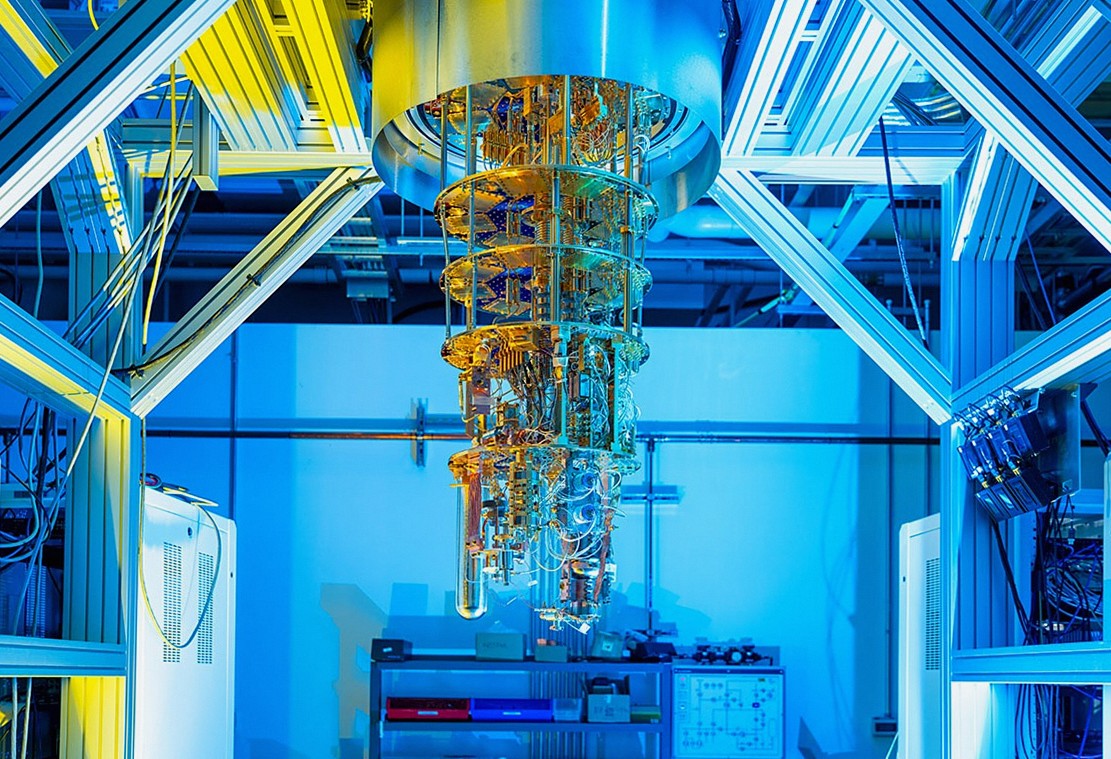
The report, titled "SCAC Quantum Committee Report: Path to an Integrated Quantum Future," was produced through an extensive stakeholder engagement process drawing input from national laboratories, academia, industry and federal agencies, with hundreds of contributors across the U.S. quantum ecosystem. Anna Grassellino, Fermilab's chief technology officer and associate laboratory director for the Technology Directorate, chaired the Quantum Subcommittee. Supratik Guha, a professor at the University of Chicago's Pritzker School of Molecular Engineering, served as vice chair.
The report describes quantum computing as rapidly transitioning from fundamental laboratory research into a scientifically transformative capability. It calls for a shift away from hardware-centric metrics toward measuring success by scientific utility — that is, solving problems otherwise considered completely intractable, such as predicting exact molecular properties for drug discovery, designing catalysts for manufacturing, simulating fusion-relevant materials and modeling the fundamental physics of the early universe.
Three-Phase Framework Aligned With Quantum Genesis Initiative
To advance toward scientifically useful quantum computers, the SCAC recommends a three-phased strategic framework aligned with the national Quantum Genesis Initiative. The roadmap aims to demonstrate scientific utility from quantum computing while building toward the integration of quantum systems with DOE laboratory research infrastructure, high-performance computing and artificial intelligence.
The Department of Energy stated it is uniquely positioned to lead this transition by leveraging its national laboratories, high-performance computing centers, testbeds and existing scientific user facilities. The goal is to integrate quantum processors directly into hybrid classical-quantum workflows that support real-world scientific discovery.
Technology-Neutral Stance and Partnership Models
The report stresses the importance of maintaining a technology-neutral stance, noting that the field is evolving too quickly to commit prematurely to a single hardware modality. Approaches under consideration span superconducting circuits, neutral atoms, trapped ions, photonics and spin qubits, with long-term investment to be guided by demonstrated scientific utility.
The SCAC report also highlights the need to break down traditional barriers between hardware developers and domain scientists, with novel partnership models under active exploration. These could include embedded co-design fellowships, joint appointments and shared technical staff across industry and national laboratories.
The report also articulates a long-term vision for a dedicated Quantum Computing User Facility, which would serve as a central resource within the DOE's broader research infrastructure. The DOE described the current moment as a historic inflection point and stated that investment decisions made over the next three years will shape global scientific leadership for decades.
Based on reporting by Fermilab (.gov)
Also in this issue
- QuEra Survey: 45% of Firms Now Prioritize Quantum Fault-Tolerance RoadmapsQuantum Zeitgeist
- DOE Report Sets Three-Phase Roadmap Toward Error-Corrected Quantum ComputingQuantum Zeitgeist
- AI Infrastructure Spending Forecast to Hit $769 Billion in 2026 Amid Safety WorriesET Enterprise AI
- Inaccurate AI Summaries Found to Distort How People Remember EventsMirage News
- Microsoft Opens Maryland Quantum Center to Host DARPA System TestingHPCwire