Digest note
Microsoft Opens Maryland Quantum Center to Host DARPA System Testing
DateSectionComputing and AI
In briefMicrosoft has opened a quantum research center in Discovery District Maryland, one year after committing to build the facility, and is expanding its presence through new research, training, and government partnerships announced on 25 September 2026.
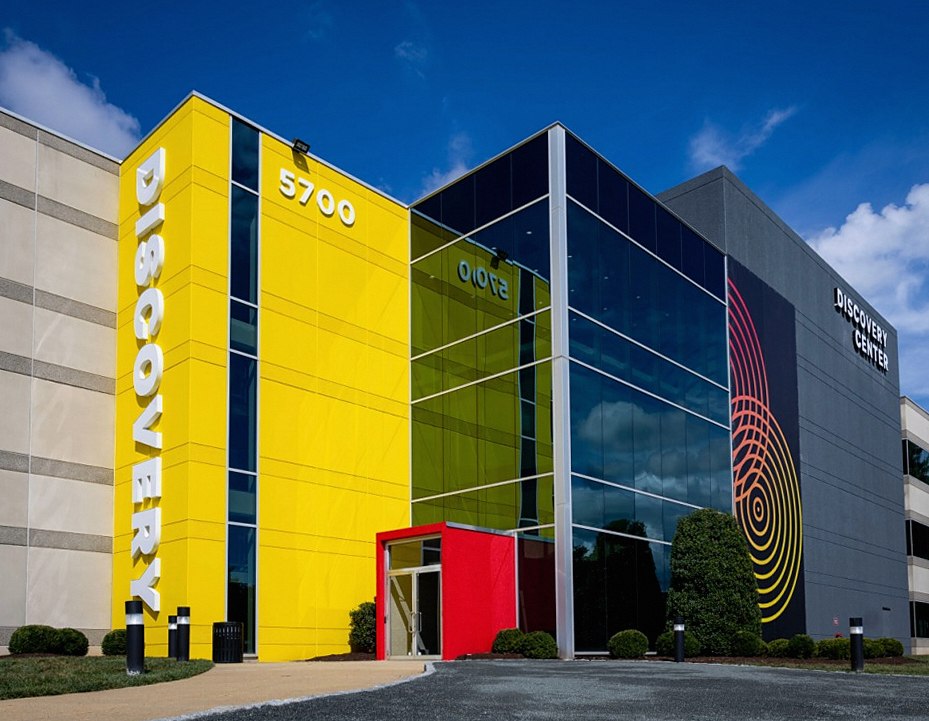
The center, spanning 15,000 square feet within the Discovery District Maryland, was shaped through collaboration between Microsoft, the University of Maryland (UMD), and Governor Wes Moore's Capital of Quantum Initiative, which funded the acquisition and renovation of the Discovery Center. The facility includes dedicated areas for Microsoft's proprietary research, space allocated to DARPA's topological system and future prototypes, laboratories and offices for partner companies, and a community-focused training laboratory.
The partner space is intended to accommodate different types of relationships. Companies building quantum technology can work with Microsoft to integrate their machines or components with the Microsoft Quantum platform, while developers and end-users can engage with Microsoft to understand how the platform can serve their needs. DARPA will have full on-site access to Microsoft's latest topological system, and its test and evaluation team brings expertise spanning hardware, controls, software, and applications.
Majorana 2 and DARPA Program Advancement
The delivery of the system to DARPA follows the announcement of Majorana 2, Microsoft's second-generation topological quantum computing chip. The chip uses a new material stack that replaces aluminum with lead for increased performance. Microsoft is one of the first companies to reach the final stage of DARPA's Underexplored Systems for Utility-Scale Quantum Computing program, part of DARPA's broader Quantum Benchmarking Initiative. The evaluation effort involves the Air Force Research Laboratory, Johns Hopkins University Applied Physics Laboratory, and national laboratories including Los Alamos, Oak Ridge, Lawrence Berkeley, and Lawrence Livermore.
The research center will also include a quantum hardware makerspace where industry, academia, and government can collaborate on hands-on quantum training. Initial partners in this effort are AMD, Bluefors, Intel, IQM, Fermi National Accelerator Laboratory (Fermilab), Riverlane, and Quantum Motion. Their contributions are intended to give learners access to real hardware and to the people who work with it. Microsoft envisions students, researchers, educators, and professionals transitioning from other fields working on open-ended projects alongside community experts, with access to components from leading quantum and computing companies to assemble small-scale but functional quantum computers.
Fermilab Collaboration and Experiential Learning Model
Microsoft's work with Fermilab extends beyond training. The two organisations are collaborating to broaden the applicability of quantum-control technologies across hardware platforms, while also working with UMD to explore how tools such as Fermilab's Quantum Instrumentation Control Kit (QICK) can be incorporated into education. Unlike quantum education efforts that focus mainly on theory or software, the initiative emphasises experiential learning across the quantum hardware stack, developing critical thinking through practical decisions about design, measurement, and troubleshooting. Microsoft intends the lessons, educational content, and collaborative model developed in Maryland to serve as a scalable framework for quantum hardware workforce development.
Microsoft also announced the launch of an annual workshop series focused on advancing measurement-based quantum computing, with goals of pushing the speed and accuracy of measurements and developing new error-correcting codes and verification protocols. The company stated it has worked on quantum information science for 18 years, with contributions spanning topological quantum computing, quantum error correction, new atomistic material stacks, and measurement-based computing. Alongside the workshops, Microsoft is funding the first quantum postdoctoral positions at UMD, supporting research in areas of mutual interest to university faculty and Microsoft Quantum.
Platform, Partners, and Near-Term Milestones
The Microsoft Quantum platform covers developer tools through a real-time operating system for quantum computers in Azure, with support for different qubit technologies. In a collaboration with Atom Computing, Microsoft is applying the platform's quantum error correction to neutral atoms. The first resulting machine, named Magne, is planned to have 50 logical qubits and is slated for operation by QuNorth in Denmark by early 2027. The Microsoft Quantum Development Kit has also received a new addition: a private-preview analytics library comprising quantum algorithms and data-science tooling for advanced analytics and large-scale data analysis.
Microsoft noted that AI is changing the pace of hardware exploration, allowing the quantum team to assess hardware architectures in a week that previously would have required a year or more to analyse. The company said this capability makes experimental infrastructure more important, as people and equipment capable of turning a promising architecture into something that can be built and measured remain essential.
Based on reporting by HPCwire
Also in this issue
- QuEra Survey: 45% of Firms Now Prioritize Quantum Fault-Tolerance RoadmapsQuantum Zeitgeist
- DOE Report Sets Three-Phase Roadmap Toward Error-Corrected Quantum ComputingQuantum Zeitgeist
- AI Infrastructure Spending Forecast to Hit $769 Billion in 2026 Amid Safety WorriesET Enterprise AI
- DOE Publishes National Quantum Computing Roadmap After Broad Stakeholder ProcessFermilab (.gov)
- Inaccurate AI Summaries Found to Distort How People Remember EventsMirage News