Home — Life Sciences and Medicine
Digest note
Global Bioinformatics Market Forecast to Hit USD 64.60 Billion by 2034
DateSectionLife Sciences and Medicine
In briefThe global bioinformatics market, valued at USD 20.34 billion in 2025, is projected to grow at a compound annual growth rate of 13.7% through 2034, reaching USD 64.60 billion, according to an analysis by Maximize Market Research.
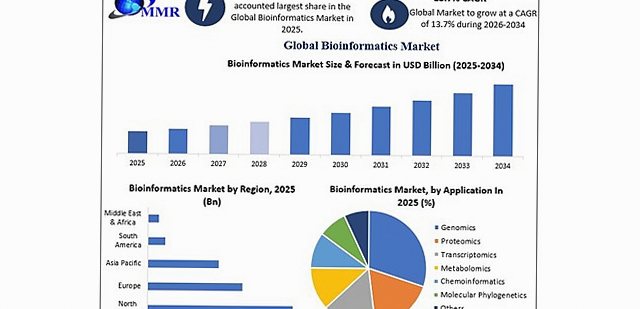
The forecast, covering the period from 2026 to 2034, encompasses a broad range of disciplines including genomics, proteomics, transcriptomics, metabolomics, molecular phylogenetics, chemoinformatics, and computational biology. Technologies assessed include sequencing, microarray, mass spectrometry, high-throughput screening, data mining, machine learning, and structural bioinformatics tools.
Key factors supporting market expansion include rising volumes of genomic and biological data, growing adoption of next-generation sequencing (NGS), the broadening scope of precision medicine, increased pharmaceutical and biotechnology R&D spending, and wider application of computational biology. Growing use of cloud-based bioinformatics platforms, biological databases, and AI-enabled analytical solutions is reshaping genomics, drug discovery, molecular diagnostics, and life-science research.
Rising NGS Adoption Fuels Demand
The uptake of next-generation sequencing is generating large volumes of genomic data, which in turn drives demand for bioinformatics platforms, sequencing data analysis tools, and biological databases. Applications in precision medicine, molecular diagnostics, drug discovery, and pharmacogenomics are adding further momentum. Declining sequencing costs and expanded sequencing capabilities are encouraging research institutions, pharmaceutical companies, and biotechnology organisations to adopt more advanced bioinformatics solutions.
Infrastructure Costs and Data Security Remain Constraints
High costs tied to high-performance computing, specialised software, data storage, cloud infrastructure, and skilled personnel can limit adoption, particularly among smaller research organisations. Genomic data privacy concerns, cybersecurity risks, regulatory compliance requirements, and interoperability issues also act as market restraints. Differences across databases and bioinformatics platforms can further complicate data sharing and integration.
A shortage of professionals with combined expertise in biology, computer science, statistics, data science, and molecular biology presents an additional challenge. This talent gap can restrict the efficient deployment of advanced solutions and may hinder organisations seeking to build large-scale bioinformatics infrastructure and genomic data analysis systems.
AI and Cloud Platforms Open New Opportunities
Integration of AI, machine learning, cloud computing, predictive analytics, and automated workflows is creating opportunities in genomic data analysis, drug discovery, biomarker identification, and molecular research. Cloud-based platforms offer scalable processing of large biological datasets while reducing reliance on on-premise computing infrastructure. AI-driven tools can support genome interpretation, protein analysis, molecular modelling, sequence analysis, and computational drug discovery, with growing uptake expected across pharmaceutical, biotechnology, healthcare, and academic research sectors.
The market is segmented by product and services, technology, deployment model, database type, application, end-user sector, and region. Deployment models covered include cloud-based, on-premise, and hybrid systems. End users span pharmaceutical and biotechnology companies, medical and agricultural biotechnology, academic and research institutes, and healthcare providers.
North America held the largest share of the global bioinformatics market in 2025, underpinned by strong pharmaceutical and biotechnology R&D, advanced genomics infrastructure, and high NGS adoption. The United States is identified as the dominant national market, supported by its established biotechnology ecosystem, genomic research capabilities, and broad use of AI-driven analytics and cloud-based platforms. Canada and Mexico are also contributing through growing biotechnology activity, genomic research, and healthcare digitisation. Asia Pacific is noted as a high-growth region within the overall market.
Based on reporting by PR Newswire UK
Also in this issue
- Jitendra Singh Urges J&K Medicine to Adapt to AI, Genomics and BiotechnologyThe Statesman
- India Set to Lead Next Generation of Medical Practices Worldwide, Says MinisterBusiness Standard
- QuEra Survey: 45% of Firms Now Prioritize Quantum Fault-Tolerance RoadmapsQuantum Zeitgeist
- DOE Report Sets Three-Phase Roadmap Toward Error-Corrected Quantum ComputingQuantum Zeitgeist
- AI Infrastructure Spending Forecast to Hit $769 Billion in 2026 Amid Safety WorriesET Enterprise AI